
Oviedo City Directory Sources
There is no verified, unbroken shelf of books devoted only to Oviedo. The sound starting set mixes three confirmed Miller's Orlando City Directory citations with federal census schedules and local repositories. Small communities often appeared in regional, county, suburban, rural-route, or telephone sections. An absent name may reflect the book's coverage rather than the person's absence from town.
The collection table distinguishes confirmed years from open-ended holdings. The State Library, East Branch, Central Branch, museum, and historical society should be asked for an item-level shelf check before any year is cited as available. That care prevents a catalog reference from being mistaken for a readable household entry.
| Collection | Years | Where Held | Access |
|---|---|---|---|
| Miller's Orlando City Directory | Confirmed citations: 1921, 1924, 1926 | Regional library or archive catalogs | Verify each volume and Oviedo coverage |
| U.S. population census | 1870 through 1950 now public | NARA and library databases | 72-year release rule |
| Florida Memory material | Item-dependent | State Library and Archives | Free scans plus reference requests |
| Local photographs and family files | Collection-dependent | Historical Society and county museum | Contact or onsite inquiry |
| Oviedo Cemetery records | Nineteenth century forward | City and Methodist Church | Ask both custodians |
The State Library city-directory holdings help identify regional titles. This image shows the state catalog route used to test a title and year.
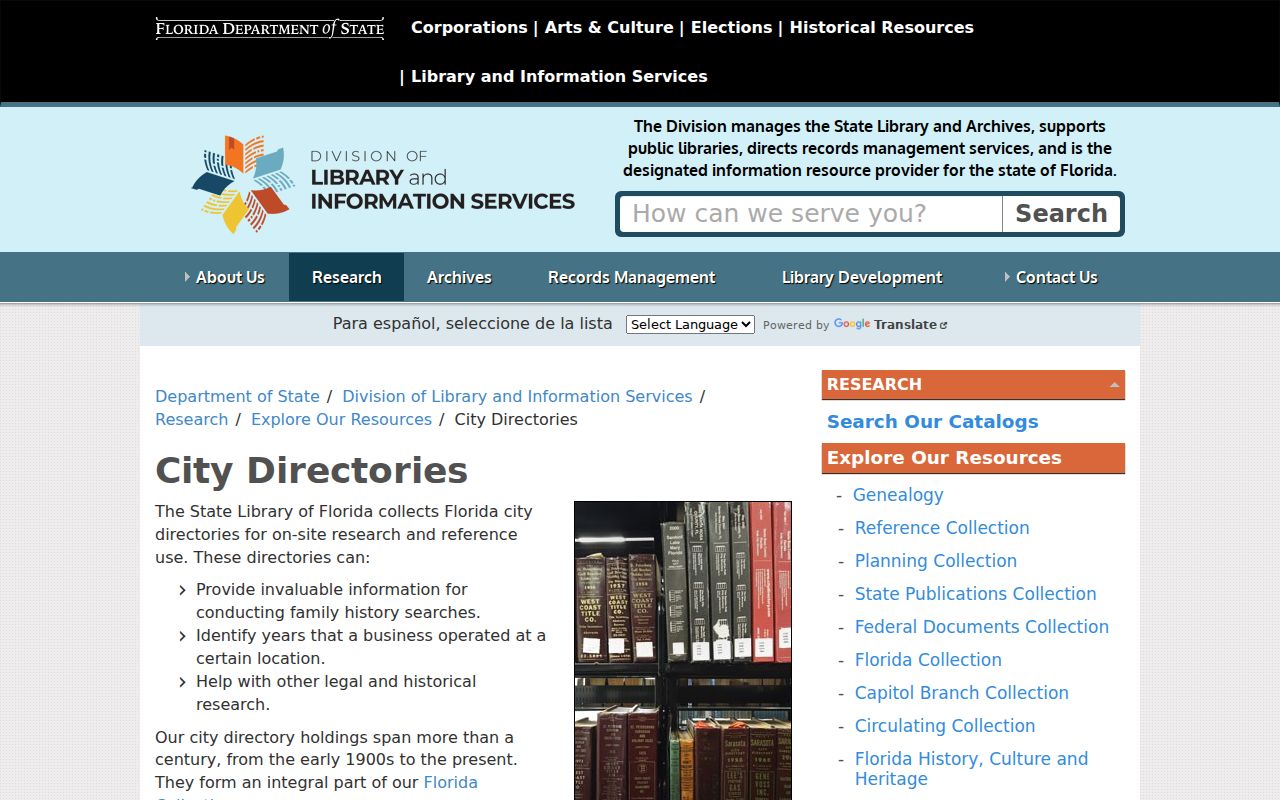
The catalog is a finding aid. Confirm that the volume includes Oviedo, Lake Jesup, or a county section before treating it as evidence.
Regional Books Place Oviedo Residents
Oviedo incorporated in 1925 with about 800 residents. That size explains why the city directory trail is regional. Search the exact town, then widen the query to Geneva, Chuluota, Sanford, and Orlando-area titles. Check county and suburban sections at the front and back. Telephone books identify subscribers, not every adult in a home.
The confirmed Miller citations for 1921, 1924, and 1926 sit near useful census years. They can bridge a household from the 1920 schedule toward 1930 when the volume truly covers the community. A missing entry cannot prove a move because publication, canvassing, and coverage may have changed. Record the volume title and coverage statement with every extract.
Newspapers add another regional layer. Search surnames, legal notices, weddings, obituaries, subdivisions, and full addresses in library databases. Access terms change, so the county library is the durable channel. Verify newspaper claims with deeds, probate, census, or cemetery files.
Lake Jesup Names Oviedo Records
Andrew Aulin named the post office Oviedo on March 13, 1879. Before that date, the settlement was the Lake Jesup community. A family could remain on the same land while the place name printed in a city directory, census, deed index, or newspaper changed. Test Lake Jesup and Lake Jessup, rural routes, and nearby town labels.
Older OCR can misread names and place terms. Search part of a surname, inspect alphabetical neighbors, and try common letter substitutions. Early river, mail, farm, and shipping sources may place a resident better than a metropolitan directory. Solary's Wharf, Mitchell Dock, citrus, celery, nurseries, and Temple Orange are useful search terms tied to Oviedo people.
Florida Memory supplies digitized photographs, maps, and manuscripts plus a catalog for non-digitized items.
Read an Oviedo Directory Line
A historical entry is compact and depends on the volume's key. Write down every mark. A name may be followed by a spouse in parentheses, trade, employer, business site, and home address. “h” can mean home, “r” rooms or resides, “bds” boards, and “wid” a widow followed by a deceased spouse. Exact usage must come from that book's key.
| Name and spouse | Gives two identities to test. |
|---|---|
| Work and employer | Connects a person to farm, shop, railroad, or business records. |
| Home address | May be a street, rural route, or nearby place. |
| Owner symbol | Has meaning only when the volume defines it. |
| Widow notation | Suggests a death search but does not prove its date. |
Photograph the title page, publisher, year, coverage statement, key, name entry, and street guide. The canvass may predate publication, so its year is not an exact move date.
- Criss-cross directory
- A section arranged by street and house number.
- Householder index
- A list centered on a named household contact, not every occupant.
- Abbreviation key
- The book's legend for shortened words and symbols.
Oviedo Directory Research Desks
East Branch is the nearest library stop at 310 Division Street in Oviedo, phone 407-665-1560. Published hours are Monday through Thursday, 9 a.m. to 8 p.m.; Friday and Saturday, 9 a.m. to 5 p.m.; and Sunday, 1 to 5 p.m. Ask staff to search the whole system for Polk titles, telephone books, yearbooks, obituary sources, and vertical files. Do not assume each item sits at East Branch.
Jean Rhein Central Branch at 215 N. Oxford Road in Casselberry, 407-665-1500, may hold countywide reference material. The Museum of Seminole County History is the next route for maps, cemetery notes, photographs, and family files. This captured page identifies the repository to contact when the city directory shelf ends.
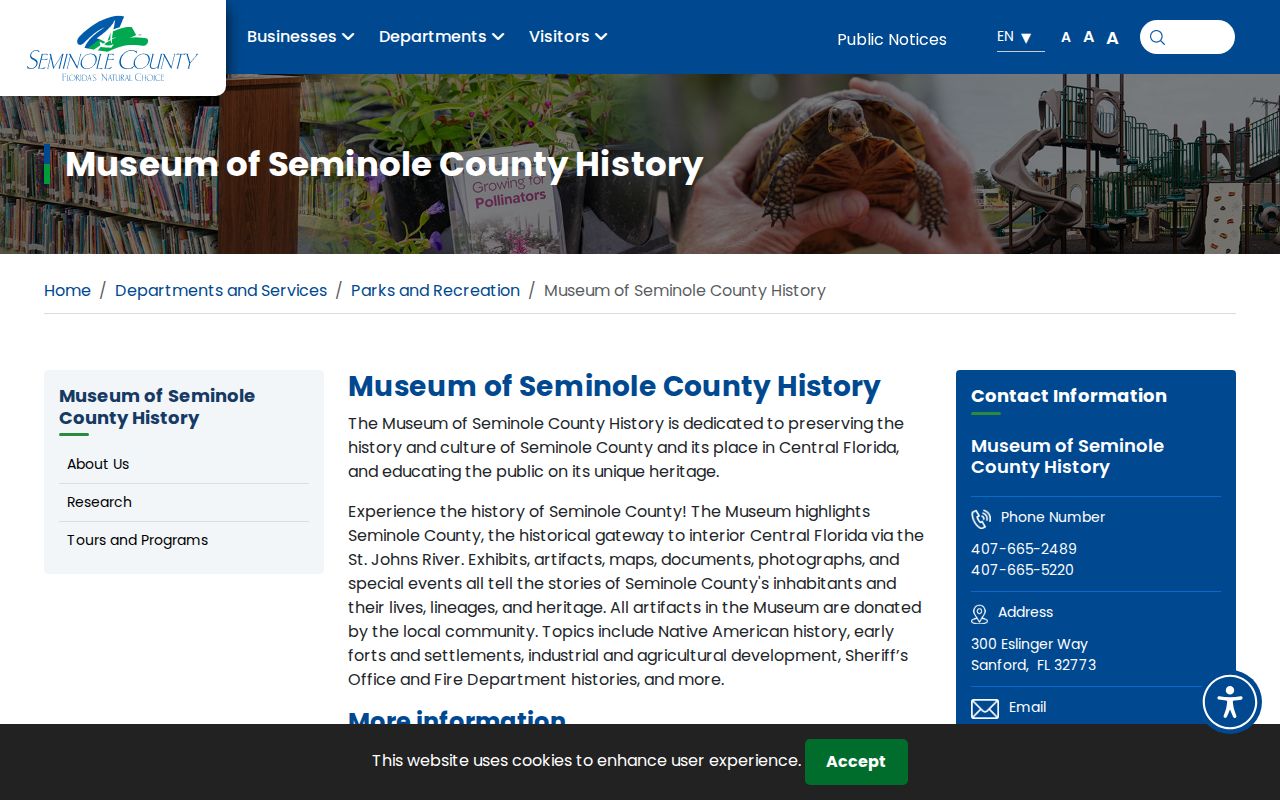
Museum staff can point to sources that were never digitized. The library locations and hours page confirms branch access.
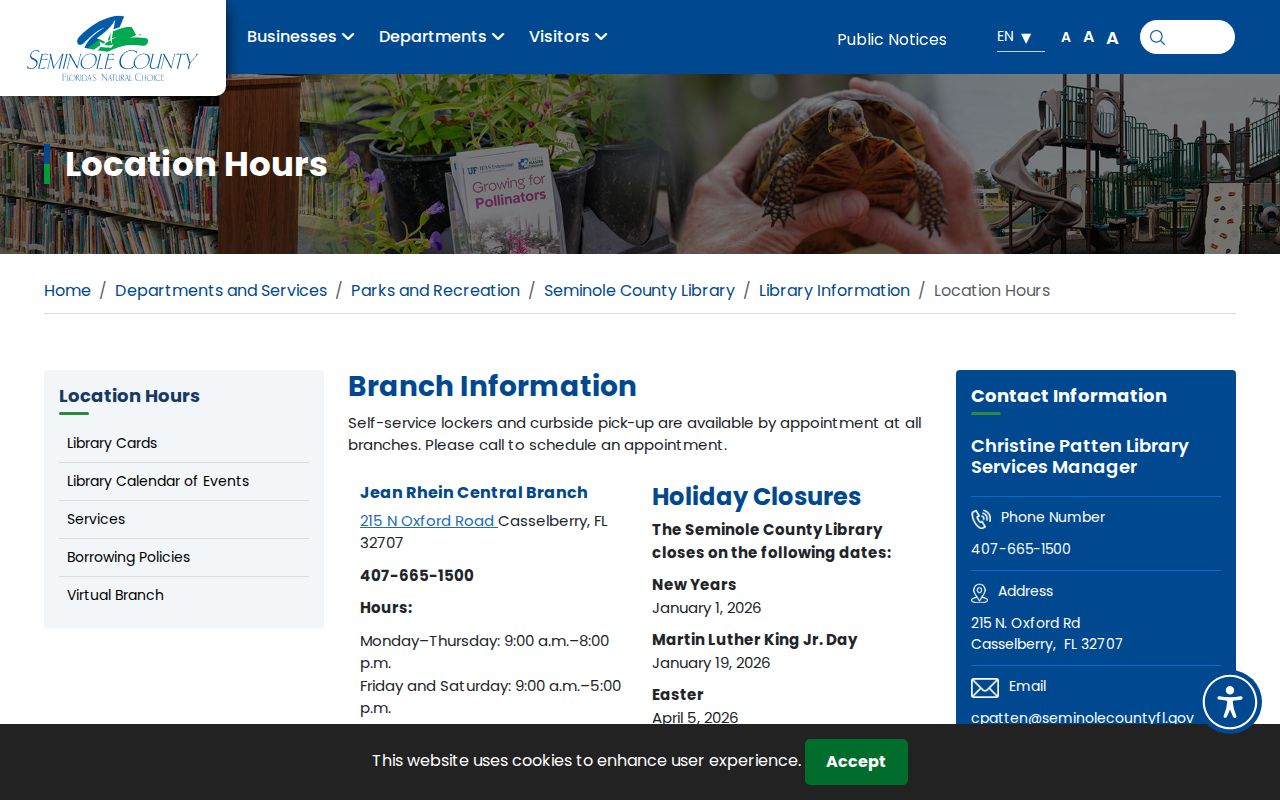
Call first to confirm hours, equipment, database licenses, and where a requested volume is held.
Oviedo Historical Society Connections
The Oviedo Historical Society research resources provide a hyperlocal path to family photographs, historic homes, publications, and community knowledge. The captured page shows the society's reference route.
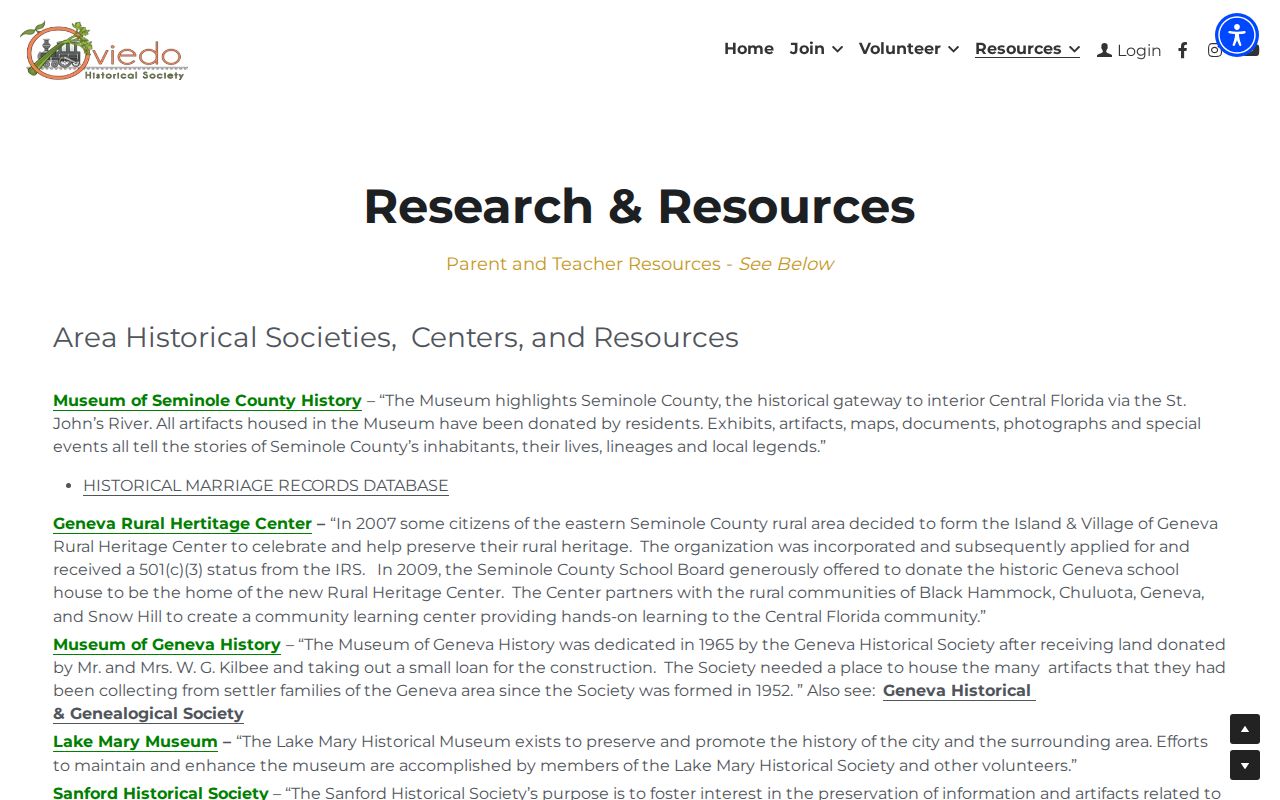
A contact is not proof that a certain yearbook or city directory exists. Ask for an inventory by title, year, publisher, and format. Request the title page and key with any matching entry. Public meeting contacts can reach an organization, but private member rosters should not be presumed open.
University of Central Florida Special Collections can add maps, publications, and community collections relevant to growth near the UCF edge. A campus directory proves an institutional role, not a home address. Keep that line clear when matching a faculty or student name to Oviedo.
Oviedo Cemetery Has Two Custodians
Oviedo Cemetery at State Road 426 and Aulin Road has a rare split. The county guide identifies ownership and records custody between the City and Methodist Church. A family-history request should name the section or denomination. When that fact is unknown, contact both custodians and compare their answers.
Boston Hill Cemetery at 199 Boston Cemetery Road adds an important Black-history route. City history says Prince Butler Boston donated five acres to Antioch Missionary Baptist Church. The dedication deed dates October 12, 1926, followed by clerk and survey approvals. Pair a church or cemetery record with deed, obituary, probate, and census evidence.
A burial entry can close a city directory trail after a widow mark or last appearance. Plot, date, relatives, denomination, and obituary details should agree before two records are treated as one person.
Note: A memorial posted by a user is only a lead until an official source confirms it.
Trace Oviedo Families Across Years
City directories work best as snapshots between census releases. Start with a person already tied to an address, spouse, or trade. Move one issue at a time and note first and last appearances. Then use census, deeds, newspapers, probate, cemetery files, and school records to test each change.
- Record the legal description, subdivision, old street spellings, and rural-route forms.
- Search a directory close to a known census year and copy the full entry.
- Compare the next issue for a move, trade change, spouse, or widow mark.
- Pair the 1920, 1930, 1940, and 1950 census households with nearby directory evidence.
- Use deeds to separate owners from occupants, then check obituary, probate, and cemetery sources.
- For events before 1913, switch from Seminole County to predecessor Orange County records.
A gap is not an event. A person may be unlisted, outside the canvass, under a variant, or in a regional section. The Oviedo previous residents search follows one address backward, while city directories explain the collections.
Seminole County Official Record Books begin in 1913 because the county was created from Orange County. The online clerk guide illustrates a 1983 search start, but that example does not erase older books. Ask Land Records staff about older indexes or images when the web result fails.